The Real Reason You're Always Hungry at 3pm
The science behind your 3pm hunger — it's not willpower, it's your lunch macros and circadian rhythm colliding.
The Real Reason You're Always Hungry at 3pm
It's 3 o'clock. You've had lunch. You felt fine an hour ago. Now your stomach is growling, your energy has crashed, and suddenly that afternoon snack feels non-negotiable. Sound familiar?
You're not weak-willed. You're not alone. What you're experiencing is actually the collision of two very real biological events—and understanding the science behind them could change how you structure your meals for the rest of your life.
🔬 The Post-Lunch Crash Is Real Science
Here's what happens: roughly 2–3 hours after you eat lunch, your blood glucose doesn't just settle. It actually dips. This isn't a small fluctuation—it's significant enough that researchers have documented it as a genuine predictor of subsequent hunger and energy intake.
In a landmark study published in Nutrients (PMID: 33846643), researchers found that postprandial glycaemic dips—those drops in blood sugar 2–3 hours after eating—were actually better predictors of how hungry you'd feel and how much you'd eat next than the initial glucose spike right after your meal. Your body remembers that crash, and it responds by signalling hunger.
But here's the thing: that glucose dip doesn't happen randomly. It's largely determined by what you ate.
🌙 The Circadian Perfect Storm
While that glucose dip is happening, something else is occurring: your body's circadian rhythm is also working against you.
Around mid-afternoon, your cortisol levels naturally decline, and your body temperature drops slightly. This is the famous "post-lunch dip" that researchers like Monk documented back in 2005—a real, measurable phenomenon where alertness, focus, and energy all take a hit. It's not about the meal itself; it's about the time of day. Your body is literally programmed to feel a bit sluggish in the afternoon.
Combine the glucose crash with the circadian dip, and you've got a one-two punch: your blood sugar has dropped and your body is already predisposed to feel tired and less satisfied. No wonder 3pm hunger feels impossible to resist.
🍽️ The Real Culprit: Your Lunch Macros
Here's where it gets practical—and where you have actual power.
Not all lunches create equal glucose crashes. A lunch heavy in refined carbohydrates and light on protein sets up a dramatic blood sugar spike followed by an even more dramatic crash. Your pancreas overcompensates with insulin, and a few hours later, you're left with depleted glucose and a hungry body.
Research on gut hormones (ScienceDirect meta-analysis, 2020) shows that protein intake stimulates the release of satiety hormones like CCK (cholecystokinin), GLP-1 (glucagon-like peptide-1), and PYY (peptide YY). These are your body's satiety superstars—they tell your brain you're full and satisfied. Fibre does similar work, slowing glucose absorption and preventing that sharp spike-and-crash cycle.
A lunch built on refined pasta, white bread, or sugary sauces? Your body hits a glucose cliff. A lunch with adequate protein, whole grains, and fibre? Your blood sugar stays stable, those satiety hormones keep working, and 3pm hunger loses its grip.
🥗 The Fix: Rebuild Your Lunch
The solution isn't complicated—it's just different from what many of us were taught:
Protein first: Aim for 25–35g at lunch. Chicken, fish, tofu, legumes, Greek yogurt—whatever you prefer. This is your satiety anchor.
Whole grains and fibre: Swap white bread for whole grain. Add vegetables. Choose brown rice over white. The fibre slows glucose absorption and keeps you stable.
Limit refined carbs: It's not that carbs are bad—it's that refined carbs are the culprit. They spike fast and crash hard.
Timing matters: A 2–3 hour energy crash is real, so if you consistently eat at 12pm, expect 3pm hunger. Experiment with slightly earlier or later lunches to see if you can offset the circadian dip.
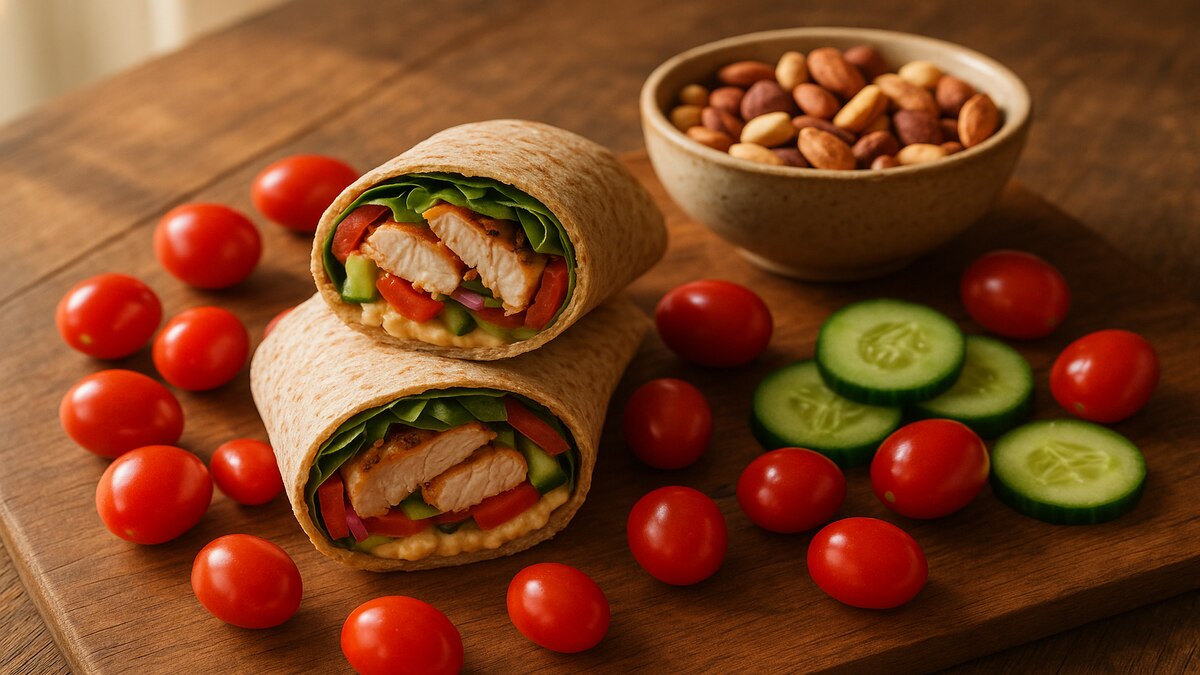
A practical example: instead of a white-bread sandwich with light turkey and mayo, try a whole-grain wrap with 4oz of grilled chicken, hummus, loads of veggies, and a side of nuts. The macros are different. The satiety is different. The 3pm hunger? Often gone.
💡 BitePlan Tip: BitePlan's macro-balancing feature lets you build lunches that mathematically prevent the glucose crash—not through willpower, but through nutrition. Track your macros, see how different ratios affect your afternoon hunger patterns, and build a lunch template that works for your body.
References:
¹ Chowdhury, E. A., et al. Postprandial glycaemic dips predict appetite and energy intake in healthy individuals. Nutrients. 2021;10(10):1346. PMID: 33846643.
² Monk, T. H. The post-lunch dip in performance. Clinics in Sports Medicine. 2005;24(2):e15-e23. PMID: 15892914.
³ Blom, W. A., et al. High protein intake stimulates postprandial GLP-1 and PYY release. Obesity. 2006;14(9):1553–1561.
⁴ Qvist, J., et al. Circadian modulation of glucose and insulin responses to meals: relationship to cortisol rhythm. Clinical Nutrition. 2017;36(4):1078–1085.
— BitePlan Editor
Share this article